Tel: 0086-13632687993
  Email: roto@lightvenus.com


 Home
HomeWhy Rotomolding is the Perfect Fit for Cleaning Robot Enclosures?
 Apr 17,2026

Why Rotomolding is the Perfect Fit for Cleaning Robot Enclosures?
The global market for automatic cleaning robots—from robotic vacuum cleaners (Roomba-style) to professional industrial floor scrubbers—is experiencing explosive growth. As these machines evolve from simple gadgets to sophisticated home appliances, the demands on their physical construction have intensified. Manufacturers are constantly seeking a production method that balances durability, design freedom, and cost-efficiency.
While injection molding is the industry standard for many consumer electronics, Rotational Molding (Rotomolding) is emerging as a superior alternative for specific applications, particularly for the main body or enclosure of cleaning robots. Here are the key advantages of using rotomolding for these smart cleaning machines.
1. Exceptional Design Flexibility for Complex Enclosure Geometries
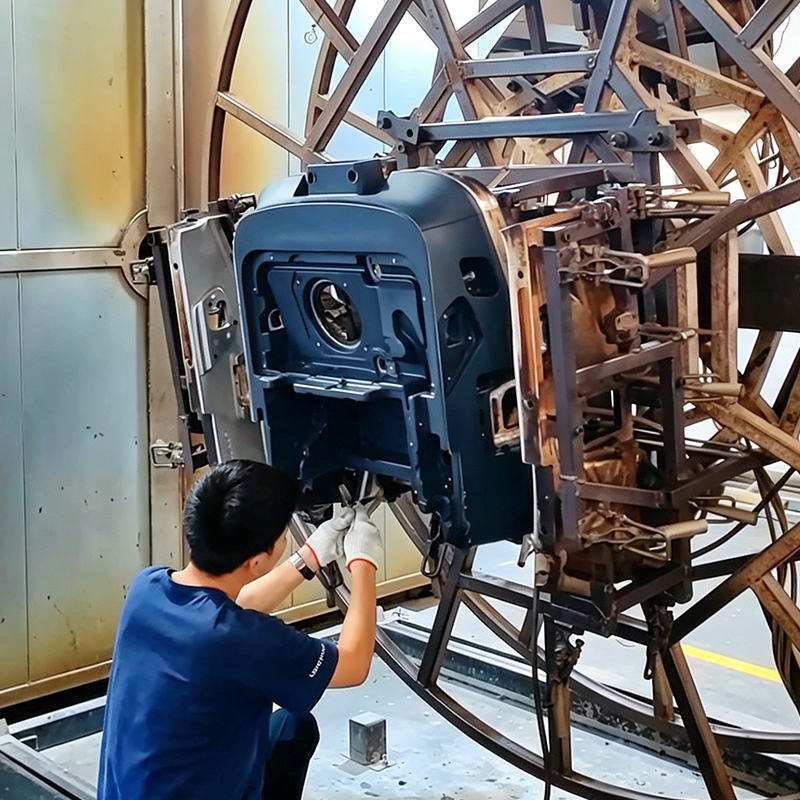
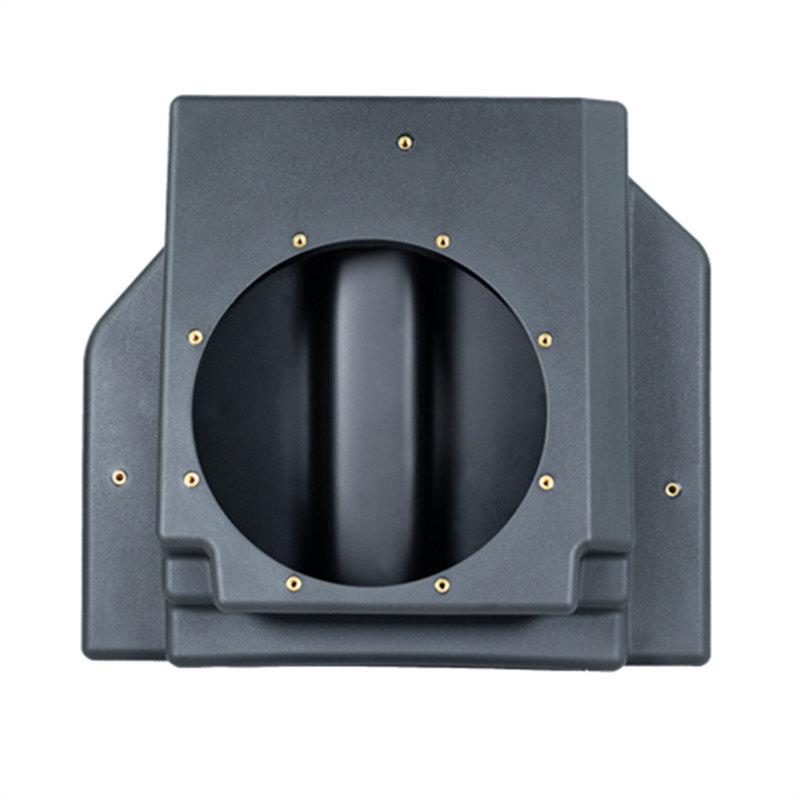
Rotomolding excels at producing complex shapes that would be difficult or impossible to achieve with other manufacturing processes. Cleaning robot enclosures often require intricate designs featuring curved surfaces, undercuts, internal mounting bosses, and integrated features such as handle grips, cable management channels, ventilation ports, metal fasteners or reinforcement components. Rotomolding accommodates these design elements without significant cost increases, as the process uses simple, low-cost molds compared to injection molding. Designers can incorporate aesthetic features, functional textures, and ergonomic contours directly into the mold, reducing the need for secondary operations.
2. Uniform Wall Thickness for Enhanced Durability and Protection
The plastic enclosures of cleaning robots must withstand frequent impacts (e.g., collisions with furniture or walls), exposure to dust and moisture, and long-term wear during daily operation. A key advantage of rotomolding is its ability to produce enclosures with consistently uniform wall thickness, typically maintained within ±10 percent—significantly more uniform than other molding processes. This uniformity ensures that the enclosure has no weak points, reducing the risk of cracking, warping, or deformation under stress.
The biaxial rotation in rotomolding ensures that the molten plastic is evenly distributed across the mold cavity, eliminating thin spots or uneven areas that could compromise structural strength]. Moreover, rotomolding allows for intentional wall thickness adjustments in critical areas—such as reinforcing the bottom of the enclosure (which contacts the floor) or the edges (which are prone to collisions)—without affecting the overall uniformity of the part. This flexibility in wall thickness design enhances the enclosure’s ability to protect internal components (e.g., motors, sensors, batteries) from physical damage and environmental factors, extending the service life of the cleaning robot.
3. Cost-Effectiveness for Low-to-Medium Production Volumes
Cleaning robot manufacturers often operate with low-to-medium production volumes, especially for new product launches, custom models, or regional market variants. Rotomolding offers significant cost advantages in such scenarios compared to injection molding, primarily due to its lower tooling costs and simplified production processes.
Rotomold tooling is simpler and less expensive to design and manufacture, typically costing 1/5 to 1/10 of the tooling for injection molding of the same size. This is because rotomolding molds do not need to withstand high pressure, allowing the use of lighter, lower-cost materials such as cast aluminum or fabricated steel sheet. Additionally, tooling lead times for rotomolding are shorter, enabling manufacturers to bring new cleaning robot models to market faster. For small-batch production, rotomolding eliminates the need for expensive secondary operations (e.g., welding, assembly) that are often required with injection molding, further reducing production costs.
4. Stress-Free Parts with Superior Impact Resistance
Cleaning robots operate in dynamic environments, where their enclosures are constantly exposed to impacts and vibrations. Rotomolding produces virtually stress-free plastic parts because the low-pressure molding process avoids the internal stresses that often occur in high-pressure processes like injection molding. This lack of internal stress makes rotomolded enclosures more resistant to impact, cracking, and warping, even under extreme temperature changes or repeated use.
Additionally, rotomolding is compatible with a wide range of durable thermoplastic materials—such as polyethylene (PE), polypropylene (PP), and their blends—that offer excellent impact resistance, chemical resistance (to cleaning agents), and lightweight properties. These materials can be further modified with additives (e.g., UV stabilizers, anti-static agents, or antimicrobial compounds) during the molding process to enhance the enclosure’s performance. For example, adding anti-static agents prevents dust buildup on the enclosure surface, while antimicrobial additives reduce the growth of bacteria, aligning with the hygiene requirements of cleaning robots.
5. Seamless Construction for Improved Water and Dust Resistance
Cleaning robots often operate in dusty or damp environments (e.g., kitchens, bathrooms), so their enclosures must provide reliable protection against dust and water ingress to safeguard internal electronic components. Rotomolded one-piece, seamless construction eliminates the gaps, seams, or joints that are common in injection-molded enclosures, which can be points of entry for dust and moisture.
The seamless design of rotomolded enclosures ensures a tight, uniform seal, making it easier to achieve industry-standard protection ratings (e.g., IP54 or higher) for dust and water resistance. This is particularly important for cleaning robots with wet mopping functions, where the enclosure must resist water splashes and prevent liquid from seeping into the internal circuitry. Additionally, the smooth, seamless surface of rotomolded enclosures is easier to clean, aligning with the core function of cleaning robots.
6. Flexibility in Color and Customization
In the competitive smart home market, cleaning robot manufacturers often seek to differentiate their products through custom colors, textures, or branding. Rotomolding offers exceptional flexibility in customization, making it easy to produce enclosures in a wide range of colors without the need for expensive post-molding painting or coating.
Powdered plastic resin can be pre-colored before molding, ensuring uniform color distribution throughout the entire enclosure (not just the surface). This eliminates the risk of chipping or fading, which is common with painted surfaces. Additionally, rotomolding allows for the integration of multiple colors in a single enclosure or the addition of mold-in graphics (e.g., brand logos) during the molding process, reducing production steps and costs. For manufacturers targeting different market segments, this customization flexibility enables the creation of unique enclosure designs that align with consumer preferences.
Rotomolding has established itself as a superior manufacturing process for plastic enclosures of cleaning robots, offering a unique combination of design flexibility, durability, cost-effectiveness, and performance. Its ability to produce seamless, uniform, stress-free enclosures with complex geometries makes it ideal for meeting the functional and aesthetic requirements of modern cleaning robots. From reducing production costs and material waste to enhancing impact resistance and environmental protection, the advantages of rotomolding directly address the key challenges faced by cleaning robot manufacturers.
As the demand for smarter, more durable cleaning robots continues to grow, rotomolding will undoubtedly play an increasingly important role in shaping the future of plastic enclosure manufacturing, enabling innovations in design, performance, and sustainability.
 What are the Advantages of Rotomolding Process in Manufacturing Motorcycle Fuel Tank?
 You May Also Like



 Tel
Tel
0086-13632687993
 Email
Email
roto@lightvenus.com
 Address
No. 1, Chuangying Road, South Industrial Avenue, Xiaolan Town, Zhongshan City, Guangdong, China

Sophy.Zhong
 Whatsapp